Gunkan Suship Deck Builds
Competitive, budget, and engine packages for Master Duel
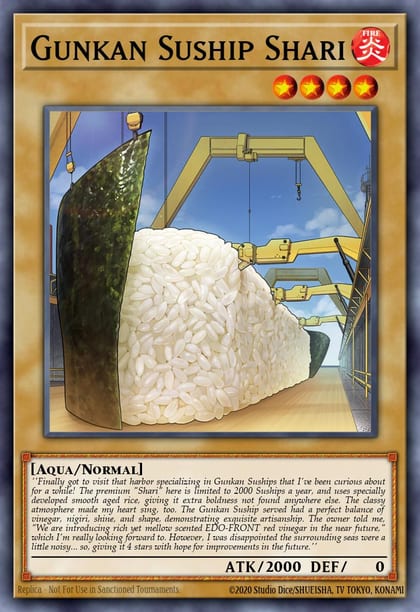
Building a Gunkan Suship deck in Master Duel is less about cramming every staple and more about respecting the archetype’s compact engine. You need enough main deck ships and toppings to reach Xyz warships, enough spells and traps to equip and search consistently, and a handful of generic answers so your Normal Summon survives the modern format. This hub collects three build philosophies—competitive optimization, budget and F2P crafting, and the standalone engine package—so you can pick a list that matches your collection and ranked goals.
What every Suship build shares
Regardless of price tag, functional lists run maximum Gunkan Suship Shari, multiple copies of Catch-of-the-Day, and at least two Gunkan Sushipyard. Those three names appear in virtually every line on the combos hub because they convert one monster into two searches and an equipped topping. From that shared core, builds diverge: competitive pilots max hand traps and Painful Decision, budget players lean on one Ikura-class Dreadnought and free staples, and experimental lists adjust topping counts to favor going-first interaction or going-second OTK bias.
Extra Deck construction stays tight. Pure Suship runs Ikura-class Dreadnought, Shirauo-class Light Carrier, and Uni-class Dreadnought with little room for fluff. Before crafting generics, confirm you can execute the xyz lines you add—an unused Castel is a slot that could have been a second tech topping in the main deck.
Choosing your build path
Pick the competitive build guide if you already own most hand traps and want a ranked-ready 40-card list with side deck suggestions. Pick the budget build guide if you are new to the archetype and need gem priorities that unlock wins before triple Ash Blossom. Pick the engine package page when you want exact ratios and side-by-side comparisons without full staple lists—ideal for players splashing Suship into another strategy or theorycrafting ratios.
All three pages cross-link the card list hub for card text reminders and the core combo lines video guide for visual sequencing. After copying a list, play ten duels and note whether you lose to consistency or interaction—then adjust ratios rather than blindly adding more staples.
Side decking and meta calls
Suship side decks in Master Duel focus on going-second tools (Evenly Matched, Lightning Storm) when going first is unlikely, or additional traps when dueling combo-heavy formats. Because the engine is small, you can side out three hand traps in favorable matchups without losing the ability to summon Shari. Document which cards underperform in your rank bracket; rogue success comes from targeted tech, not universal side plans copied from tournament lists.
After you pick a list
Once your build is chosen, drill going-first and going-second routes until muscle memory handles Catch timing and equip order. Update your list when banlist or craft sales change staple availability, but avoid chasing every tech card—Suship rewards familiarity with its own spells and traps more than splashing the week’s trending hand trap.
Frequently Asked Questions
Quick answers duelist ask most often.
What is the minimum viable Gunkan Suship deck in Master Duel?
Triple Shari, two Catch, two Sushipyard, one Ikura Dreadnought, and one topping of each type can win low ranks. Add hand traps as you craft them following the [budget guide](/builds/budget/).
Should I play pure Suship or hybrid engines?
Pure Suship is simpler and maximizes Catch searches. Hybrid lists trade consistency for non-Gunkan starters and are not covered here—start pure, then experiment once you know [core lines](/combos/core-lines/).
Which build guide is best for ranked climbing?
Use the [competitive build](/builds/competitive/) if you own staples, or [budget](/builds/budget/) until you craft them. Both assume the same [engine package](/builds/engine-package/) skeleton.
How many cards should the main deck have?
Forty cards is standard for consistency math with triple Shari and Catch. Cutting deck size without adding extreme draw power usually hurts more than it helps.